
A strengths-based play therapy framework reframes how we approach intervention. Rather than centering clinical decision-making on deficits and delays, this approach builds from a child’s existing capabilities to support participation, confidence, and meaningful progress.
Traditional training often teaches therapists to identify gaps, analyze low scores, and target what falls below average. Goals are written around what a child cannot yet do. While assessment and measurable outcomes remain essential, a strengths-based framework shifts the starting point.
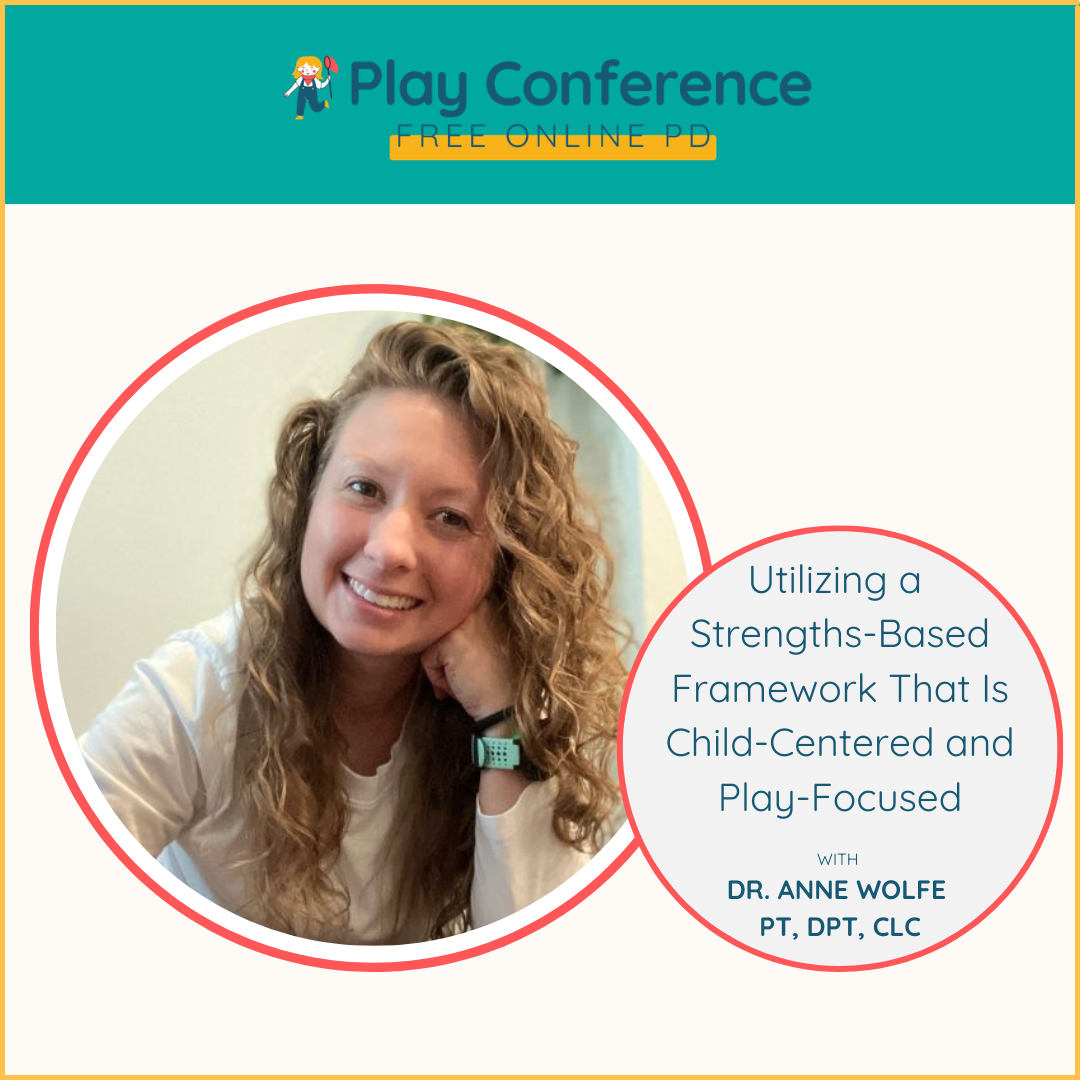
In a recent interview at the 2026 Play Conference, pediatric physical therapist Dr. Anne Wolfe shared how this shift – from deficit-driven to strength-based thinking – transforms assessment, engagement, and outcomes in pediatric therapy.
Rather than asking, “What can’t this child do?”
The question becomes, “What is this child already showing us – and how can we build from there?”

From Deficit-Driven to Strength-Based
Traditional clinical training often emphasizes identifying delays, scoring assessments, and targeting areas that fall below average. A strengths-based framework reframes this approach. While standardized assessments still provide necessary baseline data for insurance and clinical documentation, the real power lies in observation:
- What is the child naturally drawn to?
- What are they trying to access?
- What are they showing us they want to do?
This shift allows therapists to prioritize the child’s intrinsic capabilities and motivations, rather than focusing solely on what is missing.
The Core Components of a Strengths-Based Framework
1. Connection & Engagement Come First
Engagement exists on a spectrum. A child who feels safe and connected will show far more of their true abilities than one who feels pressured or unsure.
When therapists prioritize connection before performance, sessions shift. Breakthrough often happens not because the therapist pushed harder – but because the child felt comfortable enough to participate.
2. Respect for Body Autonomy
Children are not placed into positions simply to complete a task. Instead, therapists support the child only after they demonstrate motivation to attempt a movement. This approach preserves autonomy, builds trust, and strengthens intrinsic motivation.
3. Authenticity and Family Partnership
Families are invited to show up authentically, and therapists are encouraged to do the same. Therapy becomes a collaborative experience, not just a clinical session. Building trust with the entire family system makes progress more meaningful and sustainable.
Observation as Clinical Gold
Dr. Wolfe shared that one of the most meaningful shifts in her practice has been learning to step back and observe before prompting. Rather than immediately asking a child to complete specific tasks, she intentionally sets up the environment and watches what unfolds.
She described how she arranges the space to be inviting and strategically places different toys to see which one the child naturally gravitates towards, and then thinks about different activities she can utilize the toy in. If a toy doesn’t capture interest, she adjusts. If a parent has brought a favorite item from home, she incorporates it. The goal is not compliance – it is curiosity.
From there, she observes carefully:
– How does the child move independently around the room?
– What positions do they choose?
– How do they interact with their caregiver?
– How do they problem-solve?
– Where do they persist, and where do they become frustrated?
These moments of play provide rich clinical data. She is still analyzing muscle activation, movement strategies, potential range-of-motion restrictions, motor planning, and cognitive engagement. The lens remains deeply clinical – but the entry point is different.
The difference, as she explains, is subtle yet powerful: the child is not performing “on demand.” They are revealing their strengths naturally. And often, those natural moments provide far more meaningful information than a prompted task ever could.
Using the Environment as a Treatment Tool
A common myth is that play-based therapy lacks structure. In reality, it can be highly structured – just not in a rigid, directive way.
For example:
- Toys placed slightly out of reach to encourage crawling.
- A preferred activity elevated to invite pulling to stand.
- Two motivating toys spaced apart to explore gap crossing.
By adjusting the environment instead of physically directing the child, therapists preserve engagement and reveal abilities that might not appear under pressure.
Intrinsic Motivation Over External Rewards
Many therapists are trained to structure sessions around rewards: “Do this – then you get that.”
In a strengths-based play therapy framework, the activity itself becomes the motivator. Dr. Wolfe shares how shifting away from external rewards transformed her sessions. Instead of completing tasks to earn something, children engage in what is meaningful to them – whether a preferred toy, playful interaction, or reaching a caregiver.
Self-initiated movements are purposeful, regulated, and cognitively engaging, supporting motor learning more effectively than repeated assisted attempts. As Dr. Wolfe notes, two independent, child-initiated repetitions often outweigh ten therapist-assisted ones.
Beyond skill acquisition, intrinsic motivation strengthens the therapeutic relationship. Children connect therapy with autonomy, joy, and confidence – creating meaningful progress that lasts far longer than any external reward system.
Communicating Strengths to Families
A strengths-based approach also reshapes how therapists communicate with parents. Instead of focusing on deficits, discussions highlight the child’s existing skills and motivation.
This reframes challenges as barriers to participation rather than evidence of inability. Goals become individualized and meaningful, tied to the child’s daily life – whether it’s navigating uneven backyard surfaces, playing alongside siblings, or accessing favorite activities independently. By connecting therapy to what truly matters at home, families are more engaged and motivated to support their child outside of the clinic.
A Child-Centered Conclusion
Many therapists, particularly early in their careers, feel pressure to demonstrate immediate progress. Strengths-based, play-focused therapy helps alleviate this stress by shifting the focus from sheer performance to engagement, curiosity, and intrinsic motivation. Meaningful outcomes may appear subtle, but they are deeper, more sustainable, and truly reflective of the child’s capabilities.
A common misconception is that play-based therapy lacks structure. In reality, the structure is there – it supports play rather than overriding it. By entering the child’s world instead of pulling them into ours, therapists create an environment where children feel safe, connected, and motivated. In this space, they reveal far more than any checklist or assessment alone could capture.
Ultimately, a strengths-based, play-focused approach transforms therapy from a series of tasks into a collaborative, child-centered experience – one where participation, confidence, and joy become the true measures of success.
This is just a glimpse: watch the full interview plus 15 other expert-led talks from the 2026 Play Conference – The Experience Gap: Are Our Kids Experiencing the World or Just Watching It?
About Dr Anne Wolfe
Dr. Wolfe is a pediatric physical therapist with over 13 years of experience, as well as, a Certified Lactation Counselor. She has spent the last 10 years working in several sensory based outpatient pediatric clinics. She enjoys working with children of all abilities using a strengths based lens.
https://thetherapeuticedge.com/courses/strength-based-therapy-approach-for-physical-therapy/