Moving from a caseload to workload model in school-based therapy is more than a trend. It is a necessary shift. As therapists look to increase their impact beyond pull-out sessions, this approach focuses on how time is spent, not just how many students are on the caseload.
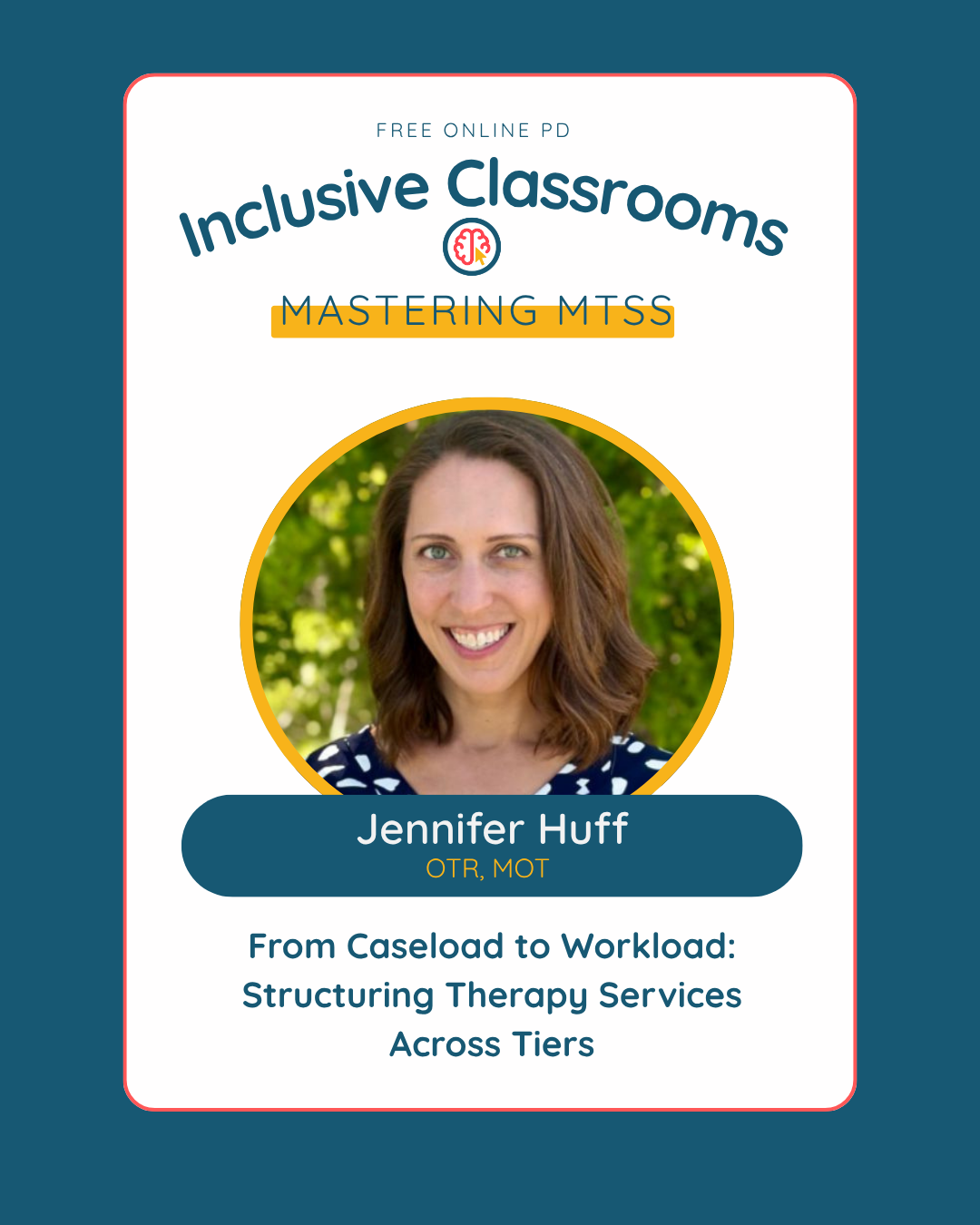
During an interview at the 2026 Inclusive Classrooms Summit, Jennifer Huff, OTR, MOT explained the difference between caseload and workload models. For many school-based therapists, the traditional caseload model has shaped how services are delivered. This model, which is largely rooted in a medical framework, tends to prioritise the number of students seen, the minutes delivered, and the completion of compliance-related tasks. While this structure provides clarity, it often limits opportunities for collaboration, classroom-based support, and proactive problem solving.
A workload model offers a different perspective. Instead of focusing solely on how many students are on a therapist’s roster, it considers everything required to effectively support those students within the school environment. This includes direct therapy, but also collaboration with teachers, classroom-based support, participation in Multi-Tiered Systems of Support (MTSS), and indirect services such as adapting materials or developing strategies for staff. You can explore this further in our blog on Multi-Tiered Systems of Support (MTSS) for school-based therapists
This shift aligns more closely with the purpose of therapy in schools. Students do not attend school to receive therapy, but rather therapy exists to support their ability to participate, engage, and access their education throughout the day.

Why the Workload Model Aligns With Educational Practice
School-based therapy is guided by federal legislation, including the Individuals with Disabilities Education Act (IDEA) and the Every Student Succeeds Act. These frameworks emphasise access to the curriculum, participation in the least restrictive environment, and support across tiers.
As these policies have evolved, so has the role of school-based therapists. The introduction of Response to Intervention within IDEA and its expansion under ESSA has created more opportunity for therapists to support students beyond those with Individualised Education Programs. Therapists are now recognised as part of a broader system of support, working across Tier 1, Tier 2, and Tier 3.
A workload model reflects this expanded role. It allows therapists to contribute not only through direct services, but also by building capacity within classrooms and supporting students who may not yet qualify for formal services.
What Changes in Day-to-Day Practice
Under a caseload model, a therapist’s schedule is often tightly structured. Time is largely spent coordinating pull-out sessions, attending required meetings, completing documentation, and conducting evaluations. This can create a reactive system where support begins only after a student has been formally identified.
Research further highlights how time is typically allocated within this model. In a 2015 issue of OT Practice, Melissa Olsen identified three primary activities that take up the majority of a therapist’s time under a caseload approach:
- compliance-related tasks such as documentation and attendance at required meetings
- delivering IEP minutes
- completing evaluations
Together, these responsibilities can limit opportunities for proactive support.
As a result, therapists may find that they are unable to provide services until a student has gone through the full referral process and qualified for support under an IEP Program or 504 plan. This reinforces a reactive cycle. It can also shape how administrators and supervisors perceive the therapist’s role, as they often see primarily pull-out sessions and may be less aware of the broader ways therapists can contribute within the school environment.
A workload model creates more flexibility. While direct therapy remains an important component, time is also intentionally allocated for collaboration, classroom-based support, and problem solving.
Moving Into the Classroom
One of the most meaningful ways to begin shifting toward a workload model is by spending more time in the classroom. Working in natural environments allows therapists to see the full context in which students are learning, including classroom routines, materials, and social dynamics.
This in-context approach makes it easier to provide immediate, relevant support. Rather than trying to replicate classroom challenges in a separate space, therapists can address barriers at the source. It also strengthens collaboration, as teachers are able to observe strategies in real time and carry them over throughout the day.
For therapists who are used to pull-out models, this shift can feel significant. However, it does not need to happen all at once. Starting with one session in the classroom or partnering with a teacher you already have a relationship with can be a practical first step.
This approach connects closely with your existing content on collaboration between therapists and teachers, particularly around shared problem solving and increasing carryover in the classroom.
Expanding the Role Through Collaboration
A workload model naturally creates more space for collaboration. Instead of working in isolation, therapists become active members of the classroom team. They contribute to lesson access, support participation, and help address barriers as they arise.
This collaborative approach not only benefits students but also supports teachers. When therapists are present in the classroom, they can provide strategies that are immediately relevant and easier to implement. Over time, this builds teacher confidence and reduces reliance on pull-out services.
This blog from our previous interview with SLP Abigail Long shares more on the benefits of co-planning and collaboration, highlighting the importance of joining team meetings and aligning supports across the school day.
Rethinking How Services Are Documented
Another important consideration within a workload model is how services are documented. Many therapists primarily record direct service minutes within the Individualised Education Program, even though they provide a range of indirect supports.
This gap is highlighted in Collaborating for Student Success by Barbara Hanft, MA, OTR/L and Jayne Shepherd, MS, OTR, where they note that school-based occupational therapy practitioners often document only direct service time. This can overlook the many ways therapists support students beyond sessions.
In practice, therapists are frequently providing indirect services such as consulting with staff, collaborating on strategies, creating visual supports, or adapting classroom environments. When these contributions are not reflected in the IEP, they can become invisible, making it harder to advocate for a broader, more flexible role.
Jennifer shares that a helpful starting point is to reflect on what you are already doing on behalf of students that could be considered indirect service. This might include:
- Collaboration with teachers or support staff
- Developing visual schedules or social supports
- Adjusting materials or environments to improve access
Ensuring these supports are documented within the IEP not only captures the full scope of your work but also reinforces the value of a workload approach.
Starting the Shift in Practice
Jennifer explains that transitioning to a workload model does not require a complete system overhaul. Small, intentional changes can begin to shift both practice and perception.
Therapists can start by reflecting on how their time is currently spent and identifying opportunities to step into more collaborative and contextual work. This might include supporting a classroom during a specific activity, consulting with a teacher about a shared concern, or introducing simple Tier 1 strategies such as movement breaks or environmental supports.
Building visibility is also key. When teachers and administrators see therapy in action within the classroom, it becomes easier to understand its value and advocate for more flexible service delivery.
Some districts have begun exploring blended approaches, such as a three-to-one model where direct services are provided for three weeks followed by one week focused on indirect support. While not a full workload model, this can provide a structured starting point.
A Shift Toward Greater Impact
The move from caseload to workload is ultimately about aligning practice with purpose. It shifts the focus from counting students and minutes to understanding what students need to succeed in their educational environments.
This approach allows therapists to work more proactively, collaborate more effectively, and extend their impact beyond individual sessions. It also supports better outcomes for students by addressing challenges within the contexts where they naturally occur.
As more schools embrace inclusive practices and tiered systems of support, the workload model offers a framework that reflects the true scope and value of school-based therapy.
This is just a glimpse: get the full interview plus 11 other expert-led talks on mastering MTSS in schools.
About Jennifer Huff
Jennifer is a school-based occupational therapist who is passionate about empowering fellow practitioners to be effective, collaborative members of their school teams. She provides resources and mentorship opportunities to school-based practitioners nationwide, equipping them to effectively engage in their vital role within the educational setting.
Website: www.jenniferhuffllc.com